One of our founders is an immigration attorney who manages hundreds of clients each year. CaseDaemon was born out of genuine frustration with the tools available. What exists wasn't working, so we built something better.
Brett was on his fourth follow-up call of the day with a client who was struggling. First, they couldn't figure out where to enter their passport information into the questionnaire, then they uploaded only the first page of their tax return rather than their tax transcript. And half of their civil documents were too blurry to even read, much less print.
Immigration law already carries enormous administrative burden. The backlog in US courts has grown past 3 million cases. The share of immigrants with legal representation has dropped from 65% to 30%. The attorneys who remain are doing more with less and spending too much of their time on tasks that shouldn't require a JD.
We started CaseDaemon with a simple belief: the time immigration attorneys spend chasing documents could be better spent on legal strategy, on their clients' actual cases, and on taking on more clients who need their help.
The name? A daemon, in the original Greek sense, is a helpful spirit; an intermediary, a guide. That's exactly what we want CaseDaemon to be for your practice.
We're three people who've each spent years in our respective fields. We're not building CaseDaemon as an experiment. We're building it because we believe the immigration legal system needs better infrastructure, and we're in a position to provide it.
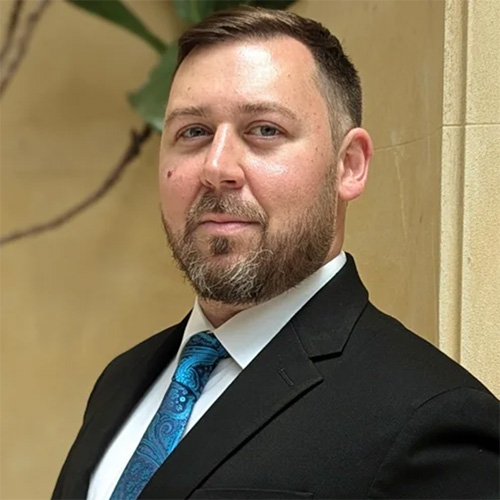
Immigration attorney with an an active practice and 12+ years of experience. Brett believes immigration practitioners need powerful tools to achieve more for their clients. By freeing up attorneys, we can get more immigrants access to legal representation and justice.

Software engineer and co-founder of Skritter and CodeCombat, both grown over a decade of careful, customer-aligned product development. Scott brings the technical depth and startup discipline that keeps CaseDaemon running reliably.

Ex-Facebook and Google product manager with experience in consumer software. George is responsible for the experience that makes CaseDaemon feel approachable to clients and frictionless for attorneys.
They shape the product decisions we make every day, including the ones that cost us money in the short term.
When CaseDaemon helps you serve more clients more effectively, you stick with us. That's our business model in full. We have no advertisers, no data brokers, no ulterior motives. If it's bad for your practice, it's bad for us.
Collecting a passport scan is not a complex problem. It shouldn't require a complex tool. We resist the temptation to over-engineer, because the attorneys we serve are busy and don't have time to learn new software.
Immigration attorneys are risk-averse by professional necessity. You're not going to adopt a new tool without being confident it won't compromise your clients' data or your practice. We'd rather earn your trust slowly than overpromise and lose it fast.
The people on the other end of your documentation requests are going through something hard. CaseDaemon's client experience is designed to feel warm, reassuring, and clear.
We're not building toward a unicorn exit. We're building a profitable, sustainable company that generates real value for attorneys and their clients over a long time horizon. That means pricing fairly, not hiding costs, and not burning customers to hit a growth metric.
CaseDaemon is a case preparation tool. It doesn't practice law, predict case outcomes, or replace the judgment of an attorney. We're explicit about this in our product, in our marketing, and in conversations with potential customers. We're a guardian spirit, not a magic eight ball.
Brett runs an active immigration law practice. He helped develop CaseDaemon with his clients in mind. If it doesn't work for him, it doesn't ship. That's a quality bar you can rely on.
Zero retention means that the text and documents that CaseDaemon handles don't get stored by an impersonal AI and used for training. We'll back that up. Just ask us to verify our ZDR policy.
We're a small team. When you have a question, you get one of us, not a tier-1 support agent reading from a script. We think that matters, especially during onboarding.
A demo is 20 minutes with one of the people who built this. No slides. Just the product, your questions, and an honest conversation about whether it's right for your practice.